Most schools offer around a 30 minute window for lunch. Now think about the things that need to be done in that time period. Restroom break, washing hands, the walk to the cafeteria, getting lunch, finding a seat, eating lunch. That is a lot when there are potentially hundreds trying to accomplish that list all at the same time. According to the CDC, some students report that insufficient time to eat is a key reason for not participating in the school lunch program.
While increasing the amount of time allotted for the lunch period is likely not an option, there are ways to cut the amount of time it takes for students to grab their food and find a seat. A school cafeteria design that was thoroughly thought through with function being at the top of the priority list ensures that kids have plenty of time to eat without feeling the pressure of the clock ticking down to the next bell.
Foundations First: Defining Your Cafeteria Goals
When it comes to school cafeteria design, whether you are starting from scratch or working with specialized school nutrition renovation services, the first step is establishing clear goals. Here are the top goals we have when stepping into every school cafeteria design project:
- Functionality and Flow: The layout needs to work perfectly for its intended purpose, which is to reduce the time it takes to get students through the lunch line and into their seats. This is a core component of school nutrition program best practices.
- Using Space Efficiently: The type of tables in your school cafeteria matter. You have to consider how much seating you need and how to most efficiently use your space to ensure that you have plenty of seats for when your cafeteria will have the most amount of people in it.
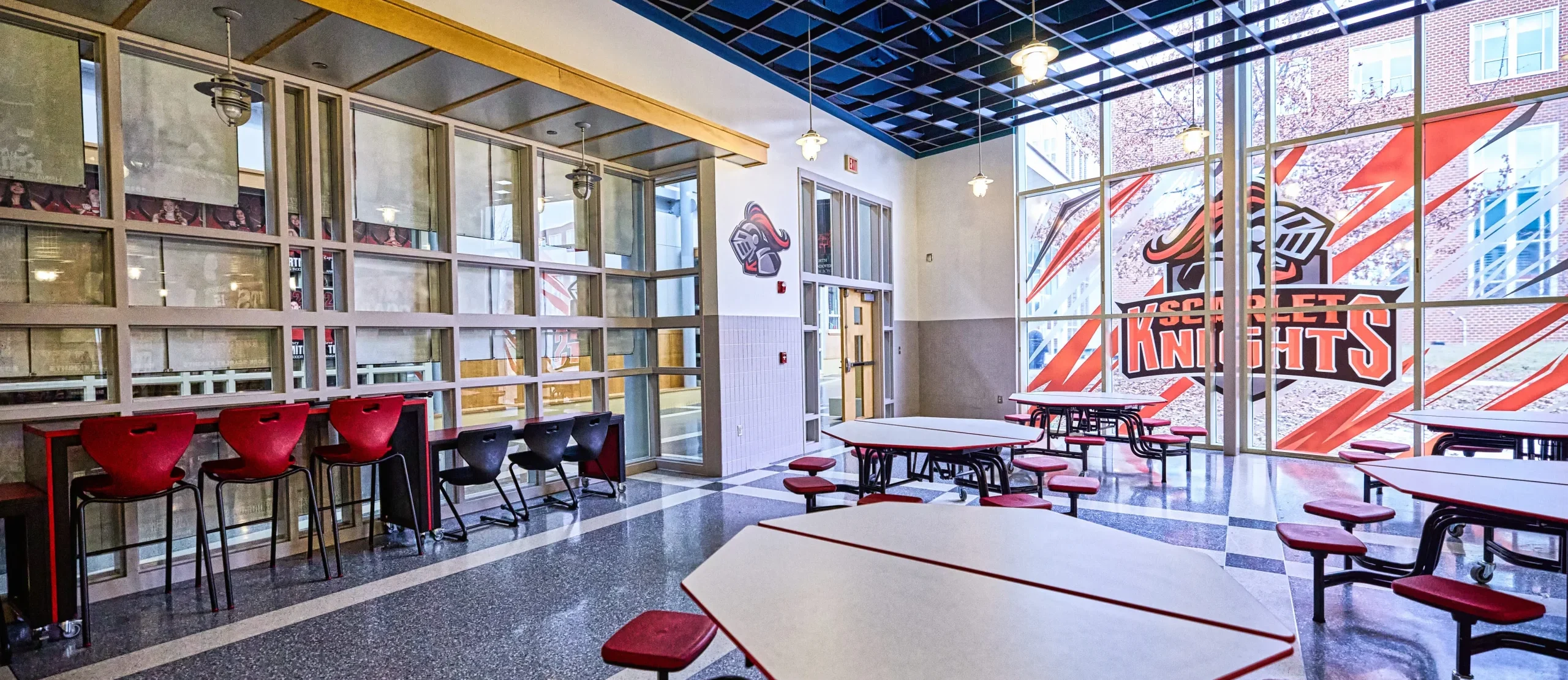
- Aesthetics: Just because flow and functionality are extremely important in the design of the cafeteria does not mean you can’t have a vibrant and welcoming space. Think about where you can have custom school graphics. Table tops, serving lines, wall murals, etc. Institutional style cafeterias are a thing of the past. Why choose between functionality and a great appearance when you can just have both?
Breaking the Bottleneck: Strategies for Smarter Cafeteria Traffic Flow
Whenever a crowd tries to move quickly toward the same destination, a bottleneck is almost inevitable. This is a common hurdle for any school cafeteria renovation that school nutrition directors take on. Luckily, a specialized school cafeteria design consultant can make specific changes to eliminate the time wasted standing in line, ultimately increasing meal counts school nutrition programs rely on. Here are a few ways to help reduce the amount of time is wasted standing in line:
- Disperse the crowd. Instead of having a single line, switch to a scramble system (food court style). This breaks up a line by having different stations such as a “hot entree station” or a “pizza station.”
- Create grab and go zones. This would be where you can have prepackaged meals, salads and sandwiches for those who want to skip the hot meal line.
- Utilize floor Graphics and painted lanes. Borrow a tactic from grocery stores and theme parks. Use distinct color-coded paint or floor vinyls to guide traffic. For example, a blue lane leads to grab-and-go, while a green lane leads to the hot line. This prevents students from wandering aimlessly.
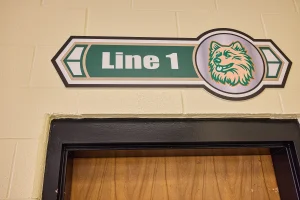
- Clear “Start” and “End” Signage. Use bold, custom wall graphics to clearly mark where lines begin and end. This eliminates confusion and prevents accidental line-cutting, which causes behavioral friction.
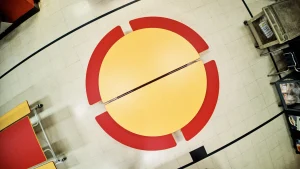
The Seating Blueprint: Choosing the Right Tables for Your School Cafeteria
School cafeteria seating is not a one-size-fits-all decision. The right combination of table types depends on your specific space, your student population, and your participation goals. Here is a breakdown of the most common options and the specific advantages each brings to a school cafeteria design.
- Rectangular Tables are the most commonly used and typically the largest so they fit the most people at them. Typically these tables are going to have the maximum density per square foot. Long rectangular tables create a linear and organized layout. They also fold up and sit flush against the wall when they need to be out of the way. If your cafeteria is getting tight on space, these are probably your best bet.
- Circular Tables have a 360 degree path access which makes them easy to maneuver around. These tables can actually soften the acoustics of a large room as they break up the rows of parallel furniture that the long rectangular tables create. This would lessen the loud echo that you might hear in a school cafeteria. Round tables are also a favorite for school cafeteria engagement ideas because they have a collaborative feel. The face-to-face seating arrangements naturally promote empathy and eye contact, which reduces physical posturing and verbal aggression.
- Booths turn low-value structural space into high-value, highly desired seating. Often you will see that a cafeteria has dead space like awkward alcoves, spaces beneath windows, or bare perimeter walls. Fixed booths hug these boundaries perfectly, keeping the center of the room entirely wide open for high-speed foot traffic. Students tend to gravitate towards booths as they give a restaurant feel to the cafeteria.
- High-tops utilize vertical space and function as excellent zoning tools between high-traffic and low-traffic areas. High-top tables often have seats that slide completely underneath them which keeps the floor level clear and minimizes tripping hazards. These tables also allow a group of friends to hang out together even if there aren’t enough chairs. Two students can sit in chairs while three others stand around the table talking. At a traditional low table, standing over your friends feels awkward and blocks the aisle; at a high-top, everyone’s heads are at the exact same physical level, keeping the group dynamic intact.
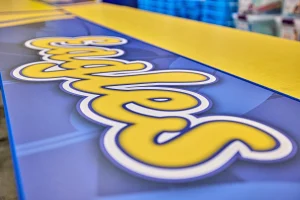
Color, Graphics, and the Psychology of a Great School Cafeteria
With flow and layout optimized, we can move on to the ultimate school cafeteria design game-changer: color. Injecting vibrant hues, fresh paint, and custom graphics into a tired school cafeteria completely alters its DNA. It’s not just an aesthetic upgrade; it’s a psychological reset. Now it’s time to unlock the creative potential of your space. Custom graphics give your cafeteria a unique voice. You can choose to ignite school pride with bold branding, or inspire students daily with uplifting, motivational artwork. If you aren’t sure where to start, let’s look at the best high-visibility canvas areas in your cafeteria to spark some inspiration.
- Wall Murals: Wall murals are the first thing a student sees when they walk into the room, setting the tone for the entire space.
- Table Tops: Every single student interacts with the table tops. Instead of default gray or faux-wood laminate, custom graphics on the surfaces create a premium feel.
- Serving Lines: By applying custom graphics to counter fronts, you can completely disguise industrial kitchen surfaces and create a polished, retail-style dining experience.
- Pillars and Columns: Instead of letting pillars block the view, wrap them in custom graphics.
- Windows & Glass: Custom window decals turn plain glass into a brilliant display, catching natural light to throw vibrant pops of color into the room while creating a warm, inviting atmosphere.
- Waste Stations & Tray Returns: The trash area is the least appealing part of a cafeteria, but custom graphics can fix that by disguising bin cabinets and clearly guiding students through cleanup.
Bringing Your New School Cafeteria Vision to Life
A school cafeteria is more than just a place where students eat; it is a vital campus hub where community is built, school pride is fostered, and students recharge for the rest of their academic day. By combining seamless spatial flow with vibrant, custom design, you aren’t just updating a room; you are giving students their time back, reducing daily stress, and boosting school morale.
Whether you are planning a full-scale redesign from the ground up or looking to breathe new life into your current space with updated seating and fresh graphics, Ingenious Culinary Concepts is ready to bring your vision to life. Contact our team today to schedule your custom spatial and design consultation!

Kern Halls is the founder and Chief Innovator of Ingenious Culinary Concepts, a cafeteria transformation company specializing in K-12 school nutrition programs. With more than 17 years inside the k-12 school environment, Kern writes from firsthand experience about the challenges and opportunities facing school nutrition programs today. He is a recipient of the 2010 USDA Food and Nutrition Services Best Practice Award, a nine-year top-rated speaker at the School Nutrition Association Annual National Conference, and has led the transformation of more than 85 school cafeterias across the United States.