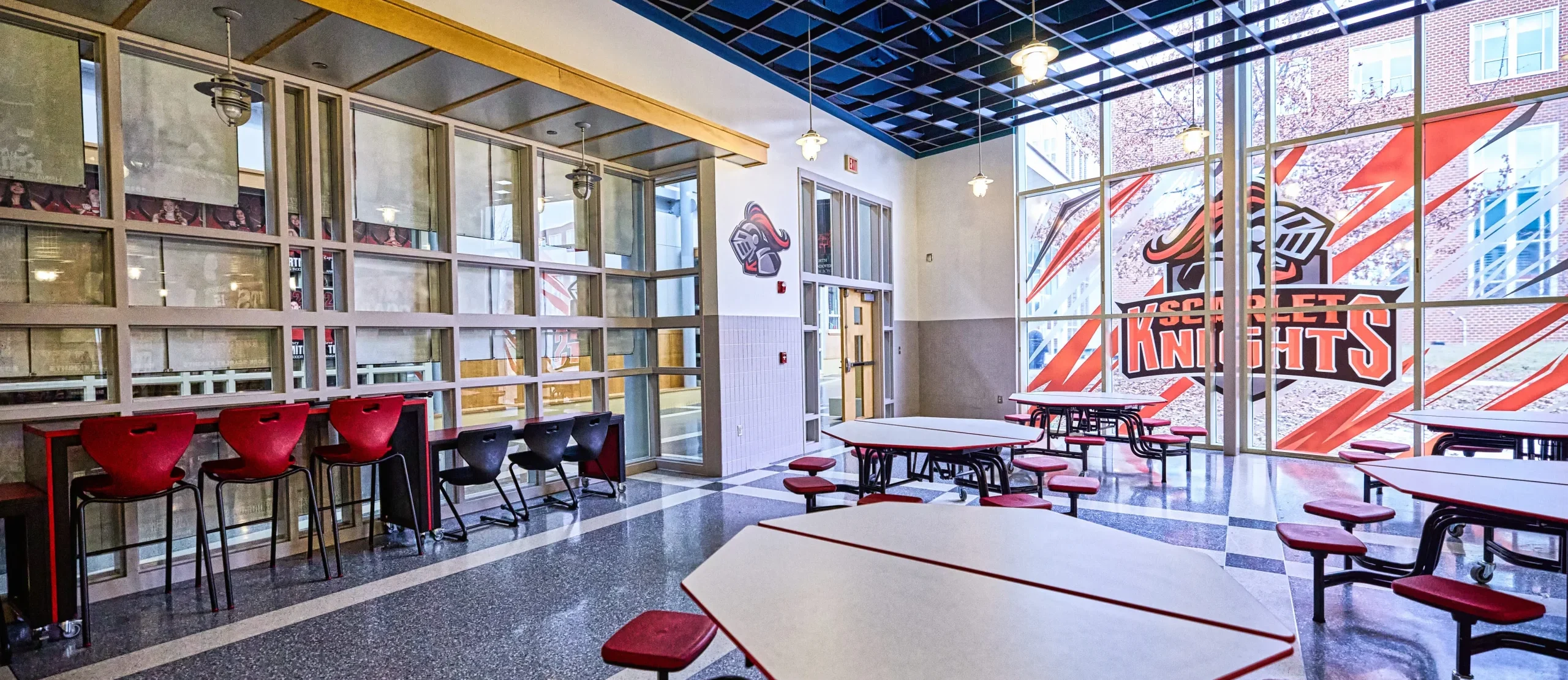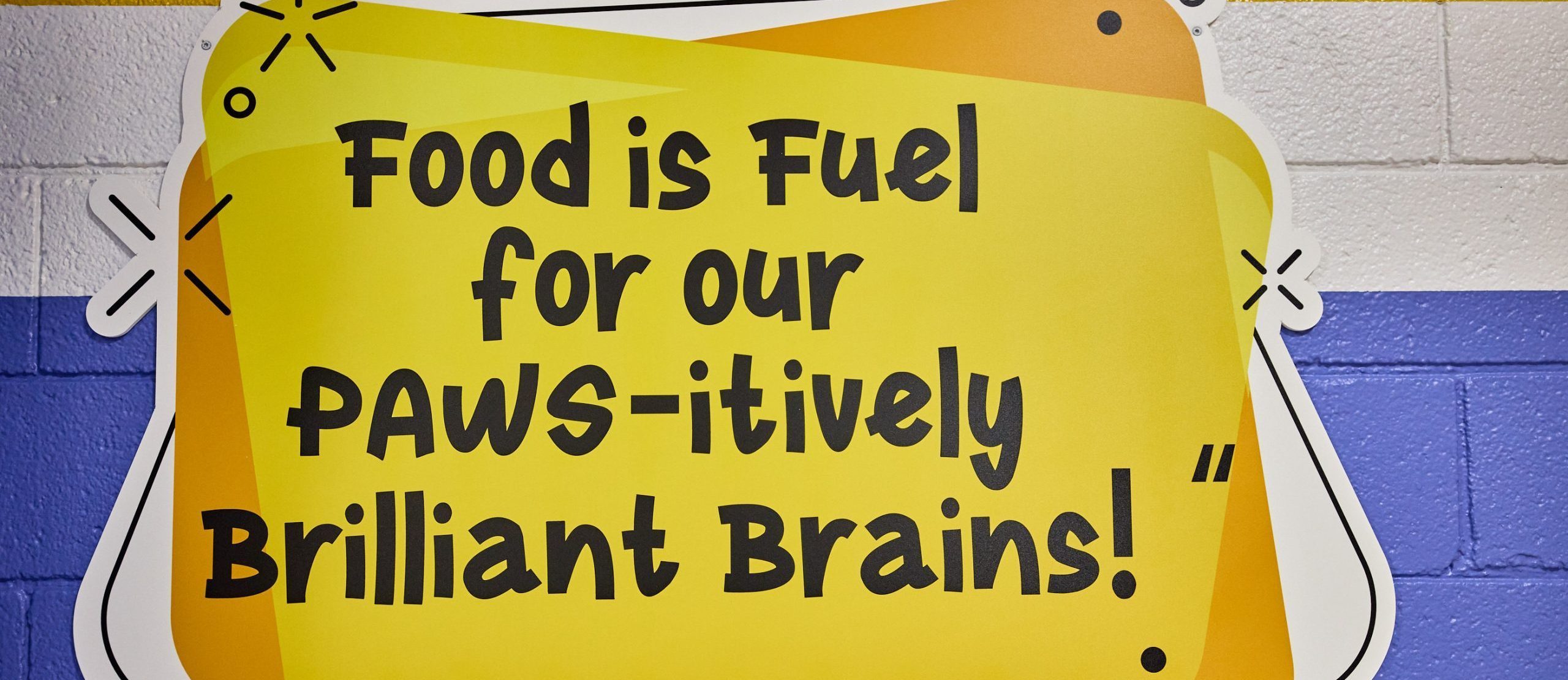
How do you feel when you walk into a large room surrounded by cinderblock walls, tile floors, and not a splash of color in sight? Some would say that feels uninviting, cold or maybe it feels like nothing at all.
That is unfortunately a common look amongst school cafeterias, and it has been for a very long time. For a place meant for children to eat, socialize, and recharge, why is a sterile environment the norm? When a school district notices low school lunch participation solutions are needed, they often look directly at the menu. However, the root of the problem is frequently the environment itself.
The Industrial Roots of the “Sterile” School Cafeteria Layout
When the Industrial Revolution started in the late 18th century, the agricultural and cottage industries were quickly being replaced by mass manufacturing. This meant that men and women would now be working away from the home and more children would be attending public schools. With more children in schools, there needed to be an efficient way to feed a large number of children and that is where the utilitarian look came from. It was never about aesthetics, it was all about function.
The 1930s: When Cafeteria Design Met Public Art
Fast forward to the 1930s, during The Great Depression, the U.S. government created New Deal programs including the WPA Federal Art Project. The WPA Federal Art Project gave work to unemployed artists by commissioning thousands of murals for schools across the country. While the primary objective was economic relief, the program successfully brought accessible art, local history, and civic pride directly into the hearts of local communities. They accidentally discovered one of the earliest school nutrition program best practices: environment directly impacts student mindset.

Why First Impressions Matter for Student Participation
We’ve all heard that we shouldn’t judge a book by its cover, but the reality is that a school’s environment sets the tone the moment someone walks in. The cafeteria is often the most high-traffic area on campus; updating it ensures your school’s first impression is one of care, innovation, and pride. It turns a functional space into a showcase of your school’s welcoming spirit. The cafeteria shouldn’t look like an institution. Incorporating a custom mural is the ultimate way to inject life into the room, turning a functional space into a dynamic showcase of your school’s welcoming spirit. When researching how cafeteria design affects student participation, the data is clear: students want to eat in spaces that feel comforting and designed just for them.
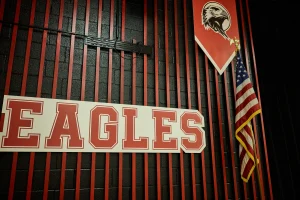
Things to Consider in the School Mural Design Process
Designing a mural is an incredible skill, and deciding what occupies your walls is not a choice to take lightly. Working with a School Cafeteria Design Consultant can help you navigate the process. Here are a few critical elements to consider when entering the design phase:
- Age Group – Your mural should match the maturity level of your students. You might have more bubbly and bright and easy to read concepts for primary and elementary schools whereas a middle or high school might have more sleek and dynamic graphics.
- Location – You’ll want your mural to be seen as much as possible so choose a high traffic area with enough space to not run into any windows, fire alarms, etc.
- Longevity – Murals are meant to be somewhere for an extended period. Using trends or pop culture references can quickly become irrelevant and no longer appeal to the students. When designing a mural you’ll want to go for more timeless themes like school pride elements or historical milestones.
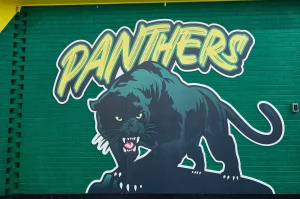
The Psychological Effects of Environmental Graphics
The purpose of murals in any space can clearly be to take a blank space and turn it into engaging art, but the psychology on the effects murals have on an individual goes much deeper. For administrators looking at school cafeteria ROI, environmental graphics are a proven method for increasing meal counts school nutrition programs require to thrive. In a school setting, custom murals actively promote:
- A Sense of Belonging – While a bare environment can inadvertently foster disengagement, a shared piece of art actively invites connection. By creating a school cafeteria mural for everyone to enjoy, you signal that every student is valued and included, not just another number in a system.
- Stress Reduction – The presence of a mural has been known to calm the nervous system which in turn reduces stress. Learning and studying paired with the social aspects of being a student can be stressful, so anything to help reduce that is a win.
- School Pride – Nothing rallies campus spirit like a massive statement piece showcasing your name, colors, and mascot. It’s more than just a decoration; it’s a daily visual reminder of the community you’re proud to be a part of.
- Inspiration – Every great idea starts with a spark. A vibrant mural can be the ultimate daily motivator, inspiring children to create, explore new concepts, and develop their own unique voices.
Beyond the Paint
School murals are a lot more than just decor. There is a lot of room for creativity and the benefits are too good to be ignored. Murals are a fantastic way to boost morale, spark inspiration and show every person who sees it that they belong. It’s more than paint on the wall; it’s an opportunity to send a positive message. Look around at your cafeteria walls. What is the message your space is sending right now? If you are ready to change it, Ingenious Culinary Concepts is here to help.

Kern Halls is the founder and Chief Innovator of Ingenious Culinary Concepts, a cafeteria transformation company specializing in K-12 school nutrition programs. With more than 17 years inside the k-12 school environment, Kern writes from firsthand experience about the challenges and opportunities facing school nutrition programs today. He is a recipient of the 2010 USDA Food and Nutrition Services Best Practice Award, a nine-year top-rated speaker at the School Nutrition Association Annual National Conference, and has led the transformation of more than 85 school cafeterias across the United States.