
The school cafeteria is more than just a place for students to eat. This is a place to gather, recharge, and connect with others. So when the space feels unwelcoming and uncomfortable, everyone notices. The good news is finding ways to improve your school cafeteria does not mean a full renovation. A few thoughtful changes can make all the difference to improve your school cafeteria!
How do you know it is time to improve your school cafeteria? From worn out furniture to confusing lunch lines, here are 5 signs it might be time to make some changes.
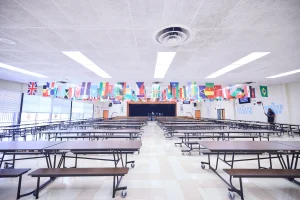
1. Students are not excited – time to improve your school cafeteria.
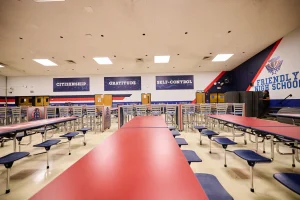
The environment in the cafeteria plays a huge role in kids’ emotions and behaviors at meal times. Is the space warm and welcoming or cold and sterile? A cafeteria with intentional colors, graphics, school branding, and thoughtful design can feel completely different from a room with blank walls and rows of identical tables.
This is one reason understanding how cafeteria design affects student participation is so important. When students enjoy the space they are eating in, it can create a more positive mealtime experience and encourage greater engagement with the school nutrition program.
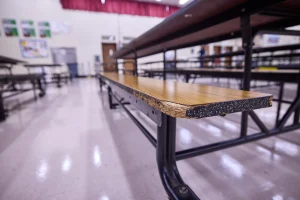
2. The furniture is worn out or uncomfortable – time to improve your school cafeteria.
From scratched up tables, wobbly chairs, or damaged benches, sometimes the easiest things to overlook are one of the most noticeable. Do you remember the last time you replaced any of the furniture in the cafeteria?
In a school cafeteria, furniture takes a beating. The tables and chairs have to withstand hundreds if not thousands of students and that means daily cleaning, spills, lots of movement, and years of use. When you have worn out furniture, it can make the cafeteria look worn down and neglected.
Updating furniture can be a simple but impactful part of school nutrition renovation services. It doesn’t always require replacing everything. Sometimes, identifying the pieces that need the most attention is a great place to start.
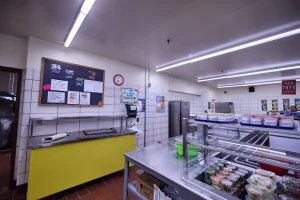
3. The lunch line looks like an obstacle course – time to improve your school cafeteria.
If your lunch line is not flowing naturally, it might not be the amount of students causing the chaos, it might be your layout. Your cafeteria should be set up in a way that supports the amount of students being served at any given time. Are there clear directions on where students should enter and exit the serving lines?
The layout of the cafeteria should be strategic. Thinking of all the logistics from where they enter the cafeteria, to where the lines are, to where they discard their trash or return their trays. A thoughtful layout keeps meal times from being a jumbled up mess.
Improving the flow of your cafeteria can also be one of the most effective school cafeteria engagement ideas. When students know where to go and what to do, the entire meal service can feel easier and more efficient.
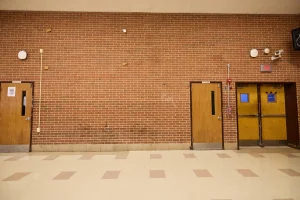
4. Whose Cafeteria is This Anyway?
If you walked into your cafeteria for the first time, would you know it belongs to your school? The cafeteria is an extension of the school’s identity and it should feel connected to the rest of the campus. This could be adding school colors to the walls, incorporating the school mascot or custom school inspired graphics to the walls or tables. Adding school spirit to the cafeteria gives a sense of school pride and makes students feel like it is their cafeteria.
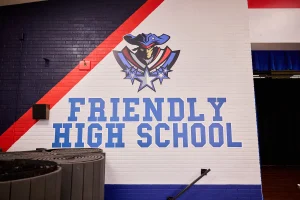
5. You think a full renovation of the cafeteria is the only solution.
It’s easy to think that you just need to start from scratch and get a whole new cafeteria all at once, but that is not the case. Even starting with one or two projects will make a huge difference. It is amazing what a fresh coat of paint and some school inspired graphics can do for a cafeteria.
Your budget might not have the space for a complete renovation and that is completely okay. Maybe it’s your tables that need attention first or maybe adding signage for your lines is the top priority. Whatever it might be, start with something and make the changes at the pace that works best for your budget and your program.
Improving Your School Cafeteria Can Be the Start of Something Bigger
A cafeteria refresh isn’t just about making the space look better. It’s about creating an environment where students want to spend time, feel connected to their school, and have a positive experience during mealtimes. When you look at design through that lens, even small improvements can have a meaningful impact.
If you’re looking for ways to improve your school cafeteria and increase school lunch participation, start by looking at the experience students are having from the moment they walk through the cafeteria doors. For schools dealing with low participation, the right combination of design, functionality, branding, and student-focused improvements can be part of a larger strategy for increasing meal counts in school nutrition.
You don’t have to figure it all out at once. Whether you need help identifying low school lunch participation solutions, improving your cafeteria layout, or developing a plan for a larger redesign, working with a school cafeteria design consultant can help you prioritize the changes that will make the greatest impact.
At Ingenious Culinary Concepts, we help schools improve their school cafeteria beyond the traditional renovation approach. From targeted improvements to comprehensive school nutrition renovation services, our goal is to create cafeterias that are functional, inviting, and designed around the students and staff who use them every day.
A better cafeteria doesn’t have to happen overnight. Start with what you can, make intentional improvements, and build from there. The result can be more than a refreshed space; it can be a stronger school nutrition experience and a cafeteria that students are excited to call their own.

Kern Halls is the founder and Chief Innovator of Ingenious Culinary Concepts, a cafeteria transformation company specializing in K-12 school nutrition programs. With more than 17 years inside the k-12 school environment, Kern writes from firsthand experience about the challenges and opportunities facing school nutrition programs today. He is a recipient of the 2010 USDA Food and Nutrition Services Best Practice Award, a nine-year top-rated speaker at the School Nutrition Association Annual National Conference, and has led the transformation of more than 85 school cafeterias across the United States.