Introduction
Creating a school cafeteria that is durable, comfortable, and aesthetically engaging involves more than just selecting tables and chairs. It is building a space that students look forward to entering every day.
As cafeteria furniture specialists, ICC understands that dining halls are among the most used spaces on campus. Hundreds and sometimes thousands of students rotate through them daily. That means spills, movement, stacking, dragging chairs, cleaning chemicals, and the constant impact of students gathering.
When furniture is chosen thoughtfully, schools gain more than seating. They achieve smoother traffic flow, reduced maintenance, sustained hygiene standards, and a social environment that fosters positive student behavior.
At ICC, we believe cafeteria environments should feel dynamic, safe, and uplifting. Colors, textures, seating styles, and spatial organization all influence student mood and engagement. Furniture plays a central role in making that experience efficient, healthy, and enjoyable.
This guide will help schools, administrators, architects, and purchasing teams understand what to look for in cafeteria furniture built to last and stand firm for years.
Why the Right Cafeteria Furniture Matters for Schools
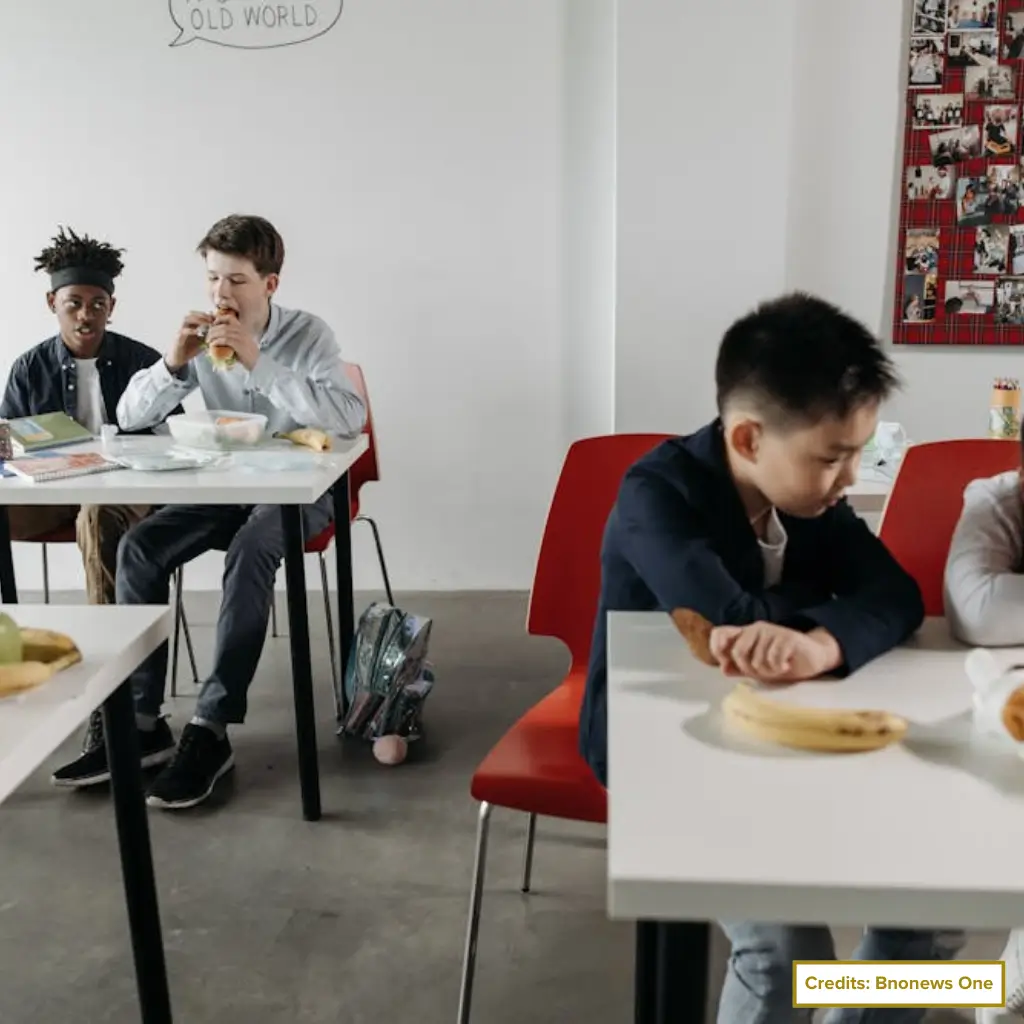
Cafeteria seating experiences more wear than nearly any other type of furniture in a school. Students lean, chat, slide chairs, spill drinks, and sometimes treat tables as impromptu study areas. Weak furniture fails quickly, leading to wobbly legs, chipped tops, safety risks, and costly replacements.
Durability is the priority. But comfort is what transforms lunch from a chaotic pause to a pleasant break. Ergonomics improves posture, reduces fidgeting, helps students relax, and supports the social-emotional reset schools aim to provide mid-day. To support this kind of planning, thoughtful cafeteria budgeting plays a vital role. Instead of choosing the cheapest option available, schools benefit from investing in stronger materials that last longer.
At ICC, we take a student-centered approach. We evaluate seating height, tabletop clearance, edge profiles, and finishes not simply for longevity but for how students interact with them. A chair that flexes gently, a bench that supports group conversation, a table that remains stable even when leaned on – these details influence the student experience more than we often notice.

Good cafeteria furniture improves:
- Health and posture through an ergonomic seat
- Hygiene and cleanliness with non-porous, easy-wipe surfaces
- Safety and traffic flow through innovative spatial layouts
- Cost efficiency by reducing long-term replacements
Suggested Reading 👉🏼 The Hidden Psychology of School Cafeteria Seating: Social Dynamics, Belonging, and Behavior
Key Factors to Consider When Choosing School Cafeteria Furniture
1. Furniture That Cleans Fast and Ages Slow
Daily cleaning cycles in cafeterias require surfaces that resist stains, liquids, odor absorption, and the effects of cleaning chemicals. When tabletops begin to swell at the edges or fabric traps crumbs, maintaining hygiene becomes challenging. Smooth, sealed materials ensure cafeterias stay fresh and visually appealing.
Look for:
- Laminate or high-pressure laminate (HPL) tabletops
- Moisture-sealed edges to prevent warping
- Non-porous surfaces that sanitize quickly
- Powder-coated metal frames to resist rust
Remember, hygienic finishes help improve school cafeterias without increasing maintenance workload.
2. Comfort + Durability
Lunch breaks typically last 15–30 minutes. Even in this short period, seat comfort makes a noticeable difference. Hard plastics without contouring, unstable frames, or narrow tabletops often cause restlessness. Ergonomics supports natural body alignment, reduces fidgeting, and encourages healthier posture.
Key comfort considerations ICC implements:
- Backrests with gentle curvature
- Proper seat height for age groups
- Smooth, rounded corners for safety
- Stable frames that do not tip or rock
- Enough space between seats to move naturally
3. Space Planning & Traffic Flow
Furniture selection is only half the equation. Layout determines how efficiently a cafeteria functions. A beautifully designed dining hall loses effectiveness if aisles are narrow, seating is tight, or traffic gets congested.
ICC begins every project with a space study that maps entry points, serving lines, walkway widths, supervision sight lines, and seating density. Spacing impacts both safety and student behavior.
Our planners help you organize your school cafeteria with smooth routes, clear food service access, and defined seating zones. Younger students often benefit from structured table groupings, while older students enjoy flexible seating clusters.
Some environments, especially private school cafeterias, opt for enhanced finishes, branding colors, and furniture with a more contemporary styling. Others prioritize capacity for rush-hour efficiency. We tailor solutions to every campus type and culture.
4. Safety Standards & Compliance
School furniture must prioritize injury prevention. Safety-conscious design features reduce risk.
Important features:
- Rounded, bullnose edges
- Tip-resistant construction
- Locking mechanisms on mobile units
- Certified safe materials
- ADA inclusive seating spaces
ADA-compliant configurations ensure every student can dine comfortably.
5. Aesthetics & School Identity
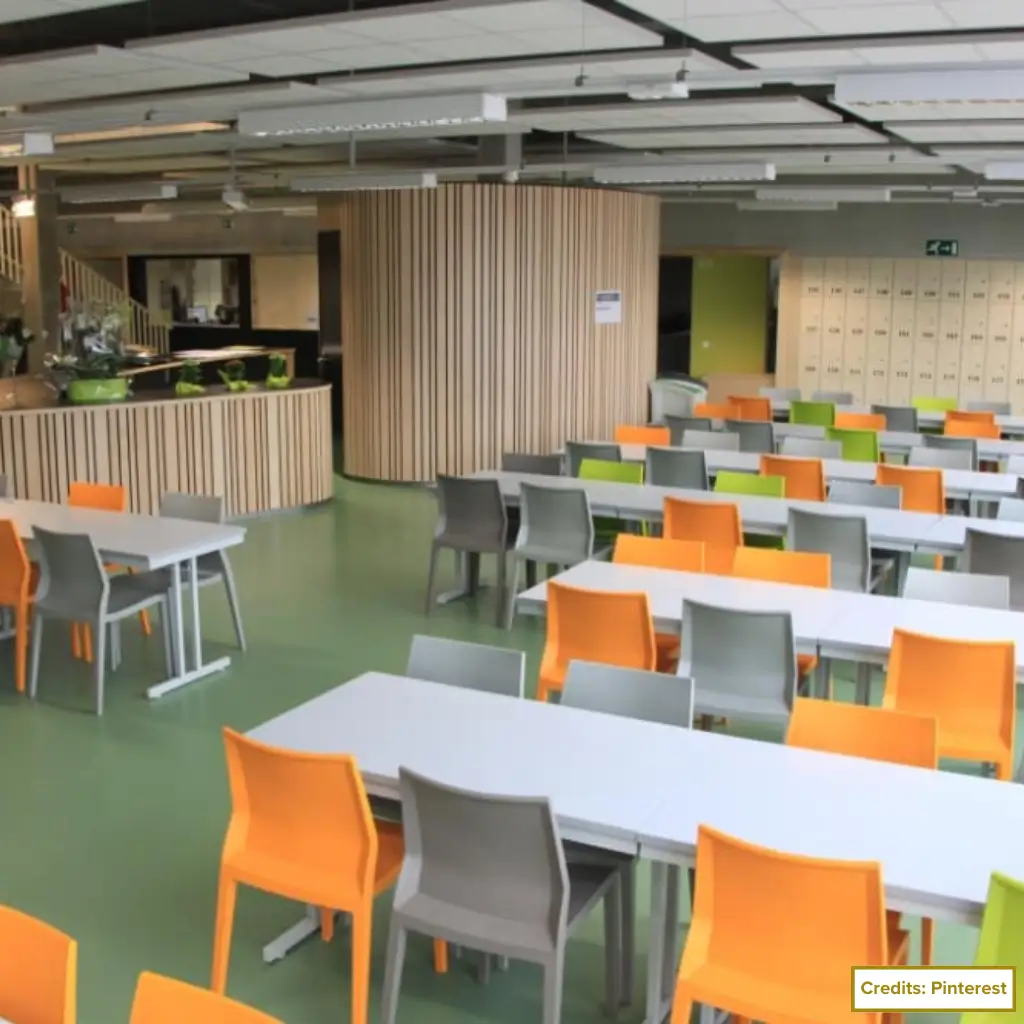
Visual appeal shapes atmosphere. Modern cafeterias feel social, vibrant, and student-friendly.
ICC frequently incorporates:
- School color accents
- Warm finishes for comfort
- Mix of seating types for variety
- Eye-catching contemporary table shapes
A beautifully designed cafeteria enhances pride and increases a sense of belonging.
6. Flexibility & Efficiency
Modern cafeterias often double as event spaces. Flexible furniture maximizes value.
Ideal solutions:
- Mobile folding tables
- Stackable chairs
- Modular bench systems
- Collaborative seating clusters
Movable furniture opens space for assemblies, parent nights, testing, or after-school programs.
Furniture Options for School Cafeterias
A high-functioning cafeteria rarely uses one furniture type. Instead, ICC blends pieces to create zones for eating, socializing, studying, or a quick grab-and-go.
1. Traditional Table & Chair Configurations
The most classic setup is easy to rearrange, replaceable by a single unit, and familiar to students. Ideal for everyday usage and multipurpose spaces.
2. Long Benching Systems
Ideal for high-volume environments where maximizing seating capacity is a priority. Encourages group dining and eases cleaning since fewer pieces come into contact with the floor. This layout naturally supports shared tables, improving social interaction and lunchtime efficiency.
3. Mobile Folding Cafeteria Tables
Perfect for multipurpose rooms used for events, assemblies, or after-school programs. One cafeteria staff member can quickly fold and move entire rows of tables. Locking casters add essential safety and stability.
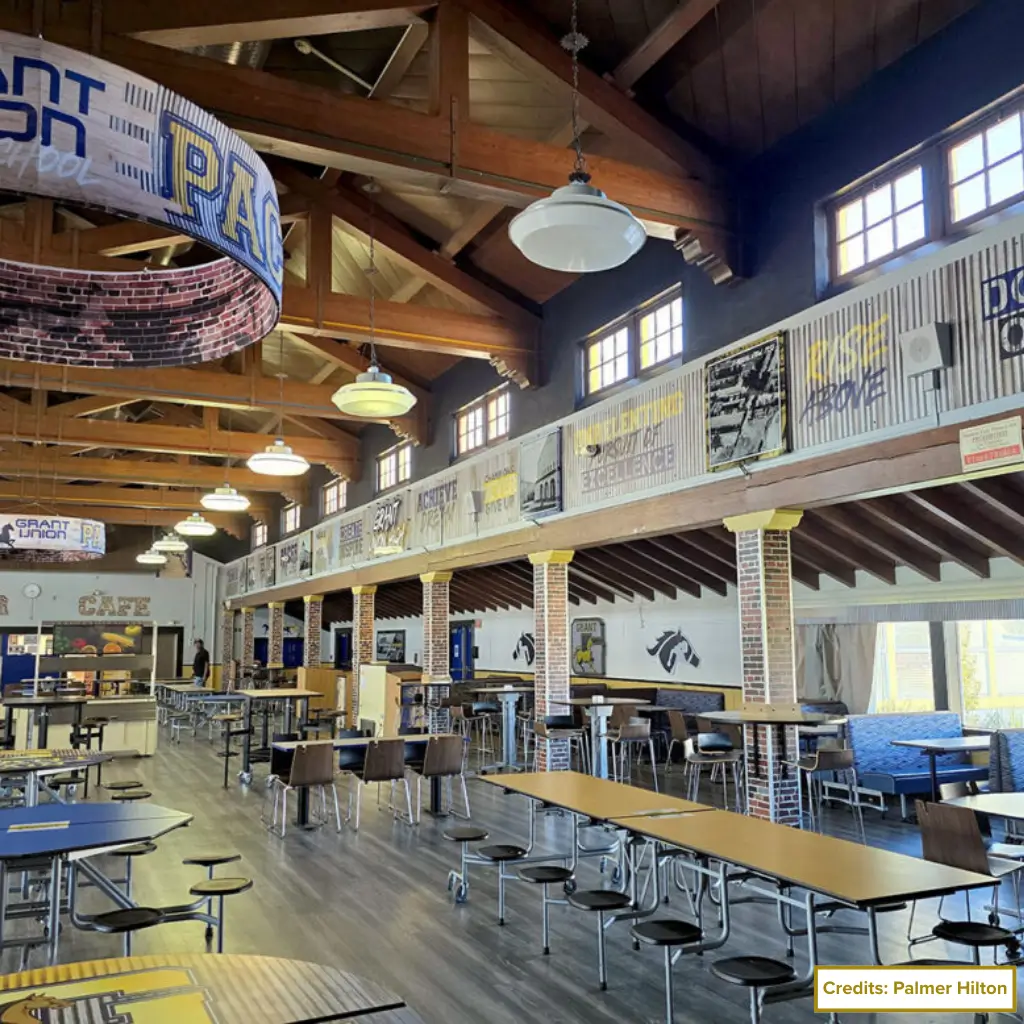
4. Booth Seating
A café-style touch. Booths reduce sound reflection, support private group discussion, and add aesthetic warmth. Popular in secondary student lounges and areas needing noise control.
5. High-Top & Mixed Seating Heights
Visual variation boosts energy. A high school cafeteria primarily benefits from café-inspired seating, as teens enjoy autonomy and flexible dining styles. Mixed heights break monotony and distribute crowd patterns.
6. Outdoor Cafeteria Furniture
An outdoor school cafeteria helps reduce indoor noise congestion and expands capacity during pleasant weather seasons. Weatherproof materials, such as HDPE, aluminum, and coated steel, transform unused courtyards into vibrant gathering hubs.
Why Investing in Quality Furniture Saves Money Long Term
Strong furniture reduces the need for repairs and replacements. Cheaper products often break within a few years, leading to repeated buying. Long-life furniture spreads its costs across a decade or more, yielding an excellent ROI.
Many improvement projects qualify for federal grants, enabling schools to upgrade furniture and infrastructure without burdening capital budgets. Schools that invest wisely once earn the benefits for years.
Over time, durable furniture also helps reduce noise in school cafeteria areas, as sturdy frames shake less and encourage calmer seating behavior.
As a result, sustainability grows naturally when replacements decline. High-quality furniture pays for itself.
ICC’s Role in Designing and Choosing the Right Cafeteria Furniture for Schools
Selecting furniture is one step; choosing the right furniture for long-term performance requires expertise and careful consideration. ICC collaborates with schools nationwide to plan cafeteria layouts that cater to today’s students while remaining future-ready for years to come.
How ICC supports schools:
- Needs assessment based on student volume & space
- 3D layout planning to optimize flow & maximize seating
- Durable furniture selection aligned with budget & goals
- Material consultation for strength, hygiene & longevity
- Brand + aesthetic integration with colors and finishes
- Installation + post-support for smooth implementation
We help schools select the right cafeteria seating solutions based on age group, space flow, maintenance goals, and visual identity. We also guide purchasing decisions between laminate types, edge profiles, structural metals, and different types of cafeteria tables based on intended use.
Our expertise ensures that your dining space is not just furnished, it is designed for students.
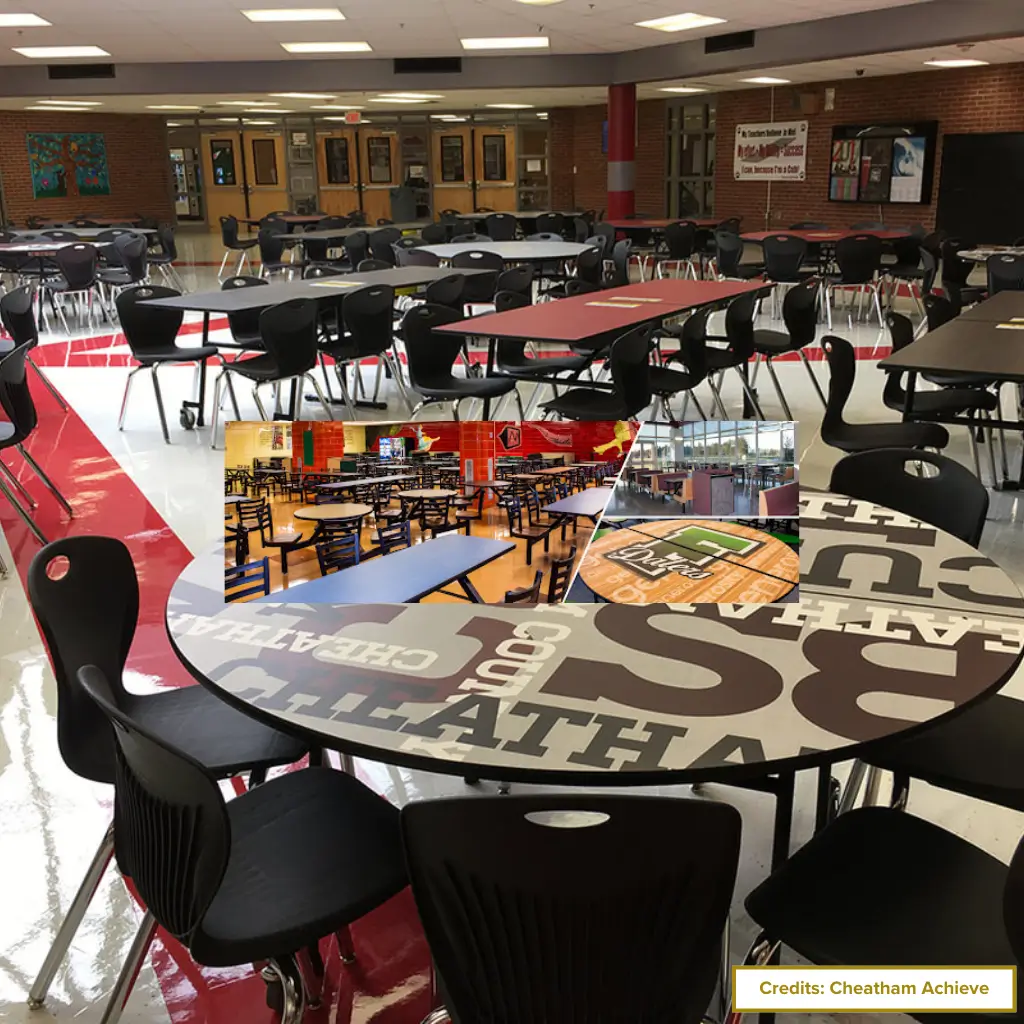
Have a glimpse of our work here.
Conclusion
Creating the best cafeteria environment is a balance of design intelligence and material durability. A great cafeteria makes lunch enjoyable, supports efficient supervision, maintains hygiene effortlessly, and withstands daily student use. When durability blends with comfort and aesthetics, the entire school feels it.
Choosing stronger materials today saves money in the future. Well-designed seating improves behavior. Strategic layouts promote smooth movement. Good finishes reduce cleaning time. Brilliant furniture transforms the cafeteria into a positive, energizing campus anchor.
At ICC, we help schools build cafeterias that create lasting environments students look forward to entering, where meals feel relaxed, friendships form, and the space remains welcoming year after year. If you’re planning a renovation or new build, we would be honored to help you shape a dining space that performs with excellence and leaves a lasting impact.
FAQs
What should we look for in durable cafeteria furniture?
Select furniture made from durable materials, such as steel or high-pressure laminate. Check build quality, joints, and weight capacity.
Why is comfort important in cafeteria furniture?
Comfortable seating encourages students to finish meals peacefully. Ergonomic chairs and properly adjusted table heights make a significant difference.
Which material is best for school cafeteria tables?
Laminate or stainless-steel tops are long-lasting and easy to clean. Avoid materials that stain or chip easily.